
Understanding the Value of Home Renovations of a Historical Home
Keep The Charm of Your Historic Home
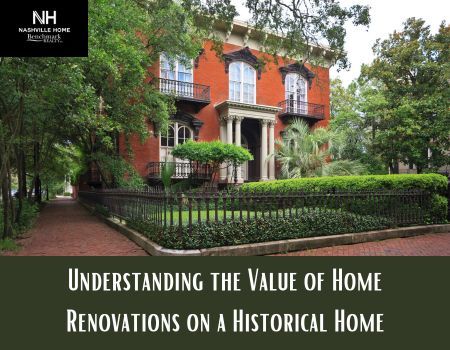 Historic homes often come with an expectation that they all possess some type of charm, and many of them do. The same type of charm that comes with crown molding and timeless built-ins often is accompanied by squeaky staircases, uneven floorboards, and dated appliances. Renovating and restoring old properties to their former glories is not an easy, nor inexpensive feat, which is why it is common to see painted-over vintage features. It is entirely possible to increase the home’s value and functionality while preserving the historic features while using your budget wisely.
Continue to read to understand the value of home renovations of your historical home and how you can save while completing this project.
How to Add Value to your Historic Home
It is always important to think of the house as a whole before zeroing in on a particular project. That is why it is important to follow the map of steps we have laid out for you below.
Make and Stick to a Plan
If you have always dreamed of an open-concept kitchen, it might affect all other projects, even if you have plans to start renovations on another room first. Having a master plan in place is key to good renovating, as it will act as a blueprint to lining up the work in logical order. This leads to the next thing, which is completing projects in a specific order. Kitchens and bathrooms should ideally be completed first, as these are the primarily important rooms.
Rebecca White of Rebecca White Luxury Homes had this to say about making a plan and sticking to it for the functionality of a historic home space:
"These particular rooms are where modern touches are usually encouraged more. Apart from being fun to look at, as these spaces are the juxtaposition between the old and the new, a kitchen and bathroom are used for functionality, and that usually requires modern appliances. After the kitchen and bathrooms, your next project should be creating an open, great family room or TV room, as this space will be your venue for gatherings."
Once these projects are completed, you can jump into the cosmetic projects. The techniques you choose should add value to your historic home and are comprised of the same as those in a modern home, from paint and all the right kitchen appliances to a balance between beauty and functionality.
Choose What You Will Keep
Before you begin the demolition part of your project, it is important to remove the historic features that you are planning on keeping. Before jumping into real work, we suggest removing molding, trim, and everything else that comes with the hours that can be repurposed so that they don’t get damaged. We also suggest keeping them in a safe place and rearranging them for later use, as you don’t want to destroy the main reasons why you purchased your historical house in the first place.
Choose What You Will Get Rid Of
When it comes to restoring a historical home, not every vintage aspect has to be carefully preserved, and in some cases, shouldn’t be. For example, an early 1900s stove may be a beautiful timepiece, but if it does not add functionality, no one expects a kitchen to be a preserved timepiece. In many cases, old appliances and materials have been proven by today’s standards to be hazardous—such as lead paint and lead glass. If a home is older than 1970, it is more than likely going to have been painted with lead-based paint. Replacing original windows can seem like a heretical thing to do, however, if it saves you from unfortunate health hazards, it is smart to go ahead and replace them if they cannot be restored.
Modernize Systems
Windows is one of many features that should be structurally sound before you begin renovating the more fun parts of the house. A house should possess the necessities for comfortable everyday living, including heat and air-conditioning systems, modern electrical, and clean drinking water. Tackling water and structural management before anything else is key, as water damage can endanger the structure of your home.
How Can I Save Money When Renovating a Historic Home?
Restoring a historic home will take up a lot of time and money, and not every homeowner might be up for this task. However, there are many ways that you can unload and ease the financial burden of a restoration, even if just by a few dollars.
Group Large Projects
One of the more effective methods of saving money during a restoration is by grouping large projects.
Joe Hayden of Joe Hayden Real Estate Team RE/MAX Properties East had this to say about grouping large projects to save money when restoring a historical home:
"We suggest moving into the home you plan on restoring and saving up to get to a point where a larger renovation can be done in one shot. If you are capable of renovating something by yourself, then doing the room-by-room DIY method is an ideal plan for you. If you find yourself incapable, or without the knowledge to safely renovate an area of your home, we suggest hiring a crew to go room-by-room for you. Even with a master plan in place, the rooms in a home flow together and can affect one another, as one wall is shared by two rooms. If you find yourself in a position where saving to renovate the whole home at once is not an option, grouping floor by floor can minimize costs."
DIY What You Can
As long as the house is in livable condition, you can learn to do upgrades to some things yourself. For example, if you love the look of a plastered wall, you can learn how to do so yourself without having to pay the expenses of hiring an artisan. If the contractors have finished before your new lights come in, you can figure out how to install them yourself rather than hiring an electrician. However, it is wise to pick and choose, as the little things do add up.
Know When to Stop
No home in the world can be everything. You might not be able to keep the original fireplace and have to eat in a kitchen without changing its whole character, some quirks aren't always worth the cost or headache to fix. There is a line where to start and stop when it comes to the restoration of historic homes, and knowing where the line starts and ends will save you from big financial mistakes.
Conclusion
Historic homes, beautiful as they are, can be a major financial burden to restore to its former glory. It can be hard to decipher where to start and stop when trying to retain the charm of the house while adding new touches for functionality purposes. It is always important to make a blueprint of a plan to follow, know when it is the right time to DIY or leave it to the professionals, and figure out how you can best save money out of the whole project to live in a functionally, beautifully restored historic home. Let the professionals at Benchmark Realty guide you in finding and settling in your dream historic home in the many beautiful neighborhoods in Nashville, TN today!
Categories
Recent Posts






"My job is to find and attract mastery-based agents to the office, protect the culture, and make sure everyone is happy! "